
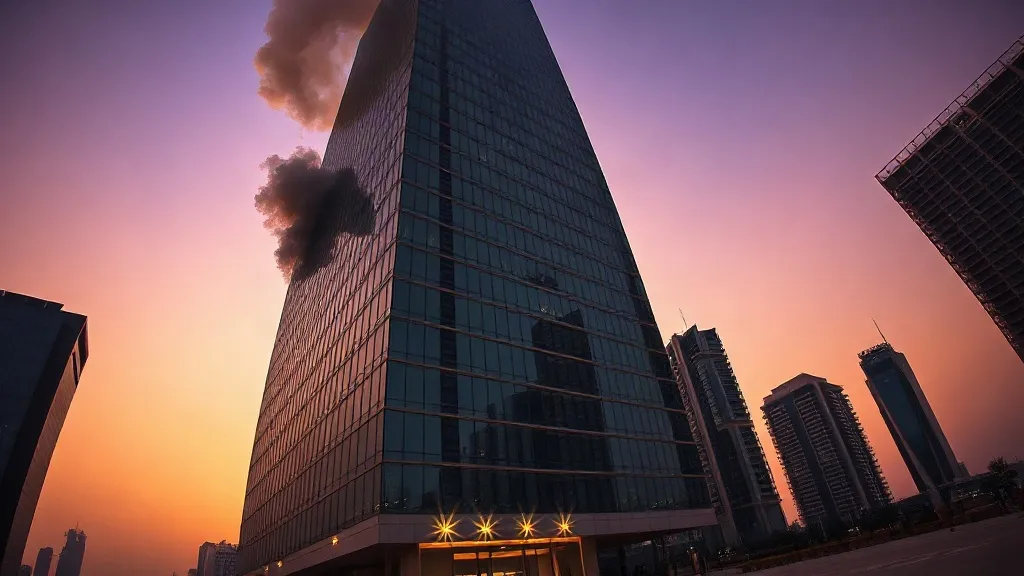
When news broke that a Houthi attack had struck the towering headquarters of Saudi Arabia's Public Investment Fund (PIF) in Riyadh, injuring 11 people, it wasn't just another headline from a long-running conflict. For investors, business leaders, and ordinary Saudis, it was a stark reminder that even the most fortified symbols of economic ambition are not immune to the region's volatility. The fact that this was the second such attack in six days, following an earlier strike that caused no casualties, adds a layer of unease. It suggests a pattern, and patterns have consequences.
What Happened and Why It Matters
The attack targeted the PIF tower, a gleaming skyscraper in Riyadh's financial district that houses the $700 billion sovereign wealth fund, a central pillar of Crown Prince Mohammed bin Salman's Vision 2030 plan to diversify the Saudi economy away from oil. According to reports, the strike injured 11 people, though the extent of their injuries remains unclear. The Houthis, an Iran-backed group that controls large parts of Yemen, have claimed responsibility for similar attacks in the past, though they have not yet commented on this specific incident.
This is not the first time the Houthis have targeted Saudi infrastructure. Over the years, they have launched drones and missiles at airports, oil facilities, and military sites. But hitting the PIF tower is different. It's not just a physical structure; it's a symbol of Saudi Arabia's economic future and its growing global influence. The PIF has stakes in companies like Uber, SoftBank's Vision Fund, and Lucid Motors, and it is the vehicle through which the kingdom is pouring hundreds of billions into domestic projects like NEOM, the futuristic city in the desert. An attack on the PIF is an attack on the very engine of Saudi Arabia's post-oil ambitions.
The Broader Context: A Conflict That Won't Stay Contained
The Houthi movement has been fighting a Saudi-led coalition since 2015, when the kingdom intervened in Yemen's civil war to restore the internationally recognized government. The war has killed tens of thousands of people, displaced millions, and created one of the world's worst humanitarian crises. While the Houthis have frequently targeted Saudi territory, most attacks have been intercepted by Saudi air defenses or have hit less strategically important locations. The strike on the PIF tower, however, demonstrates an ability to penetrate deep into the capital and strike at the heart of the financial district.
Why now? The timing is significant. The attack comes amid renewed diplomatic efforts to end the Yemen war, with talks between Saudi Arabia and the Houthis having made some progress in recent months. Some analysts suggest the Houthis may be trying to gain leverage at the negotiating table by demonstrating their continued ability to inflict pain on the kingdom. Others point to Iran's role, as the Houthis are widely seen as a proxy force. Tehran may be signaling its displeasure with Saudi Arabia's growing ties with Israel or its stance on nuclear negotiations. Either way, the message is clear: the Houthis can reach high-value targets, and they are not afraid to use that capability.
Implications for Business and Investment
For businesses operating in Saudi Arabia, the attack raises immediate questions about security and continuity. The PIF tower is home to not only the sovereign wealth fund but also a number of financial institutions and multinational corporations. While the physical damage appears limited, the psychological impact on employees and executives could be significant. Companies may reassess their security protocols, and some might consider relocating key personnel or operations to less conspicuous locations. The attack also serves as a reminder that geopolitical risks in the Middle East are far from resolved.
Investors, too, will be watching closely. Saudi Arabia has been on a charm offensive to attract foreign investment, and the PIF has been a key vehicle for that effort. The kingdom has touted its stability and its ambitious reforms, but images of smoke rising from the PIF tower could give some potential investors pause. That said, the Saudi government has a strong incentive to downplay the incident and reassure markets. Expect official statements to emphasize that business continues as usual and that security measures are being reinforced. The longer-term impact will depend on whether this becomes a sustained campaign or a one-off escalation.
For the PIF itself, the attack is a test of its resilience. The fund has grown rapidly under the leadership of Crown Prince Mohammed bin Salman, who chairs its board. It has become a major player in global finance, and its investments are closely watched. A successful attack on its headquarters could undermine confidence in its operations. However, the PIF's assets are diversified, and its leadership is unlikely to be deterred. In fact, the attack may strengthen the case for the fund to invest even more heavily in domestic projects that create jobs and reduce dependence on oil, as a way to bolster national security.
What to Watch Next
In the coming days, several key developments will shape the narrative. First, the Saudi government's response will be crucial. Will it retaliate militarily, or will it double down on diplomacy? The kingdom has shown a willingness to engage with the Houthis in recent months, and a major escalation could derail those efforts. Second, the international reaction will matter. The United States and other allies have condemned the attack, but their willingness to provide additional security assistance or intelligence support could affect Saudi Arabia's ability to prevent future strikes. Third, the business community's reaction will be telling. If major companies announce new investments or expansions in Saudi Arabia despite the attack, it would signal confidence in the kingdom's stability. If they delay or reconsider, it could be a warning sign.
For now, the immediate focus is on the injured and on ensuring the safety of those who work in the PIF tower. But the broader implications are hard to ignore. The attack is a reminder that Saudi Arabia's ambitious economic transformation is taking place in a dangerous neighborhood. The kingdom's ability to protect its crown jewels, both physical and financial, will be critical to its success.
Frequently Asked Questions
What is the PIF tower and why is it significant?
The PIF tower is the headquarters of Saudi Arabia's Public Investment Fund, the kingdom's sovereign wealth fund. It is located in Riyadh's King Abdullah Financial District and is a symbol of Saudi Arabia's economic diversification efforts under Vision 2030. The fund manages over $700 billion in assets and has invested in major global companies.
How many people were injured in the attack?
According to reports, 11 people were injured in the attack. The severity of their injuries has not been disclosed. The previous attack on the same tower six days earlier caused no casualties.
Who are the Houthis and why did they target the PIF tower?
The Houthis are an Iran-backed rebel group that controls much of Yemen. They have been fighting a Saudi-led coalition since 2015. They have targeted Saudi infrastructure in the past, but the PIF tower is a high-profile target that symbolizes Saudi economic power. The group has not yet claimed responsibility for this specific attack, but it is widely believed to be behind it.
What does this mean for foreign investment in Saudi Arabia?
The attack could raise concerns among foreign investors about security risks. However, Saudi Arabia has been actively courting foreign investment and may try to downplay the incident. The long-term impact will depend on whether attacks continue and how the government responds. So far, there is no indication that major investors are pulling back.
Is it safe to travel to Riyadh?
Riyadh is generally considered safe for travelers, but the attack on the PIF tower is a reminder that security risks exist. Travelers should stay informed about current events and follow advice from local authorities and their embassies. The U.S. State Department and other governments issue travel advisories for Saudi Arabia, which should be consulted before planning a trip.